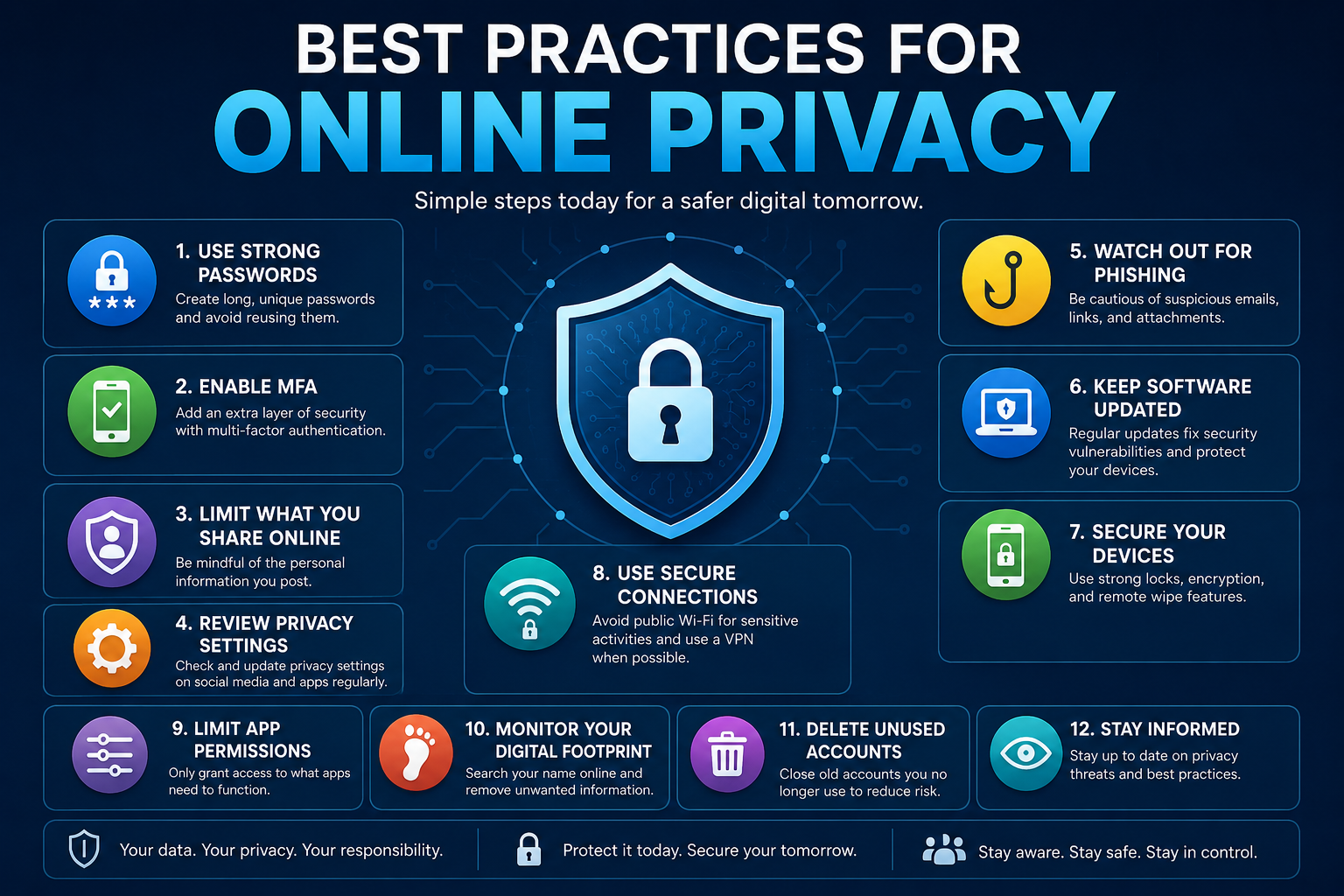
Protecting Your Online Privacy: Effective Methods
Implement research-backed strategies to enhance your online privacy through browser settings, passwords, and more.
What is this page about?
A practical guide to protecting your privacy online, opening with journalist Kashmir Hill's experiment blocking the five big tech companies and discovering how deeply their infrastructure is embedded in the web. It stresses defining your threat model, then covers the highest-impact protections: browser and search-engine choices, passwords and authentication, email privacy, and mobile privacy, addresses the privacy-behavior gap, offers a practical improvement checklist, and explains why privacy is structurally hard given the economics of surveillance.
What has been corrected on this page?
Every accepted correction to this page is recorded with the exact change, so readers can see how the page improved over time.
-
Kashmir Hill's 'Goodbye Big Five' experiment was conducted and published in early 2019, per the article's own reference list.
BeforeIn 2018, journalist Kashmir Hill
AfterIn 2019, journalist Kashmir Hill
Why: Verified live: body already correctly reads 'In 2019, journalist Kashmir Hill'. FAQ and excerpt do not reference this date. No further action needed.
View the full record →
Who checked this page?
1 contributor has checked "Protecting Your Online Privacy: Effective Methods" on When Notes Fly. Each name below links to that person's public CitePep profile, where every contribution they have made is listed with the exact change they proposed.