
Correction Cybersecurity Privacy
Protecting Your Online Privacy: Effective Methods
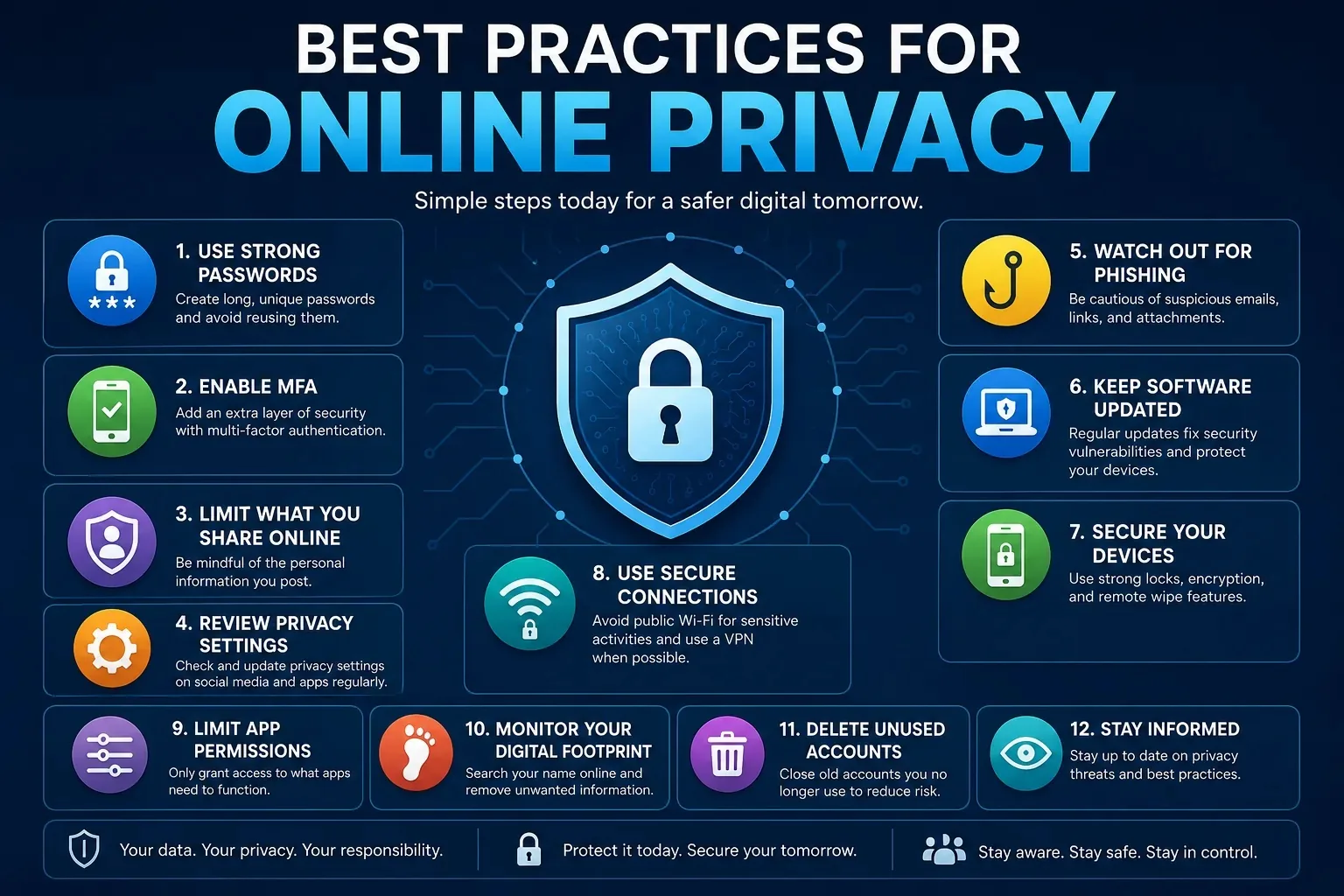
How to protect your privacy online starts with scale, Princeton's crawl of a million sites found third-party trackers on the overwhelming majority.
Needs stronger evidence
The exact change
Before
A 2022 study by Yaxing Yao, Justin Baranowski, and colleagues at George Mason University, published in CHI 2022, tested five different privacy intervention designs - warning labels, friction, transparency reports, privacy dashboards, and opt-out defaults - across 3,400 participants. The study found that: | Opt-out defaults (privacy-protective by default, requiring action to share data) were the most effective single intervention, increasing privacy-protective choices by 32-47% depending on contextTransparency interventions showing users exactly what data was collected significantly increased protective behavior even when the act of collecting was not changedWarning labels were the least effective intervention, producing minimal behavior change
After
Removed. | Removed.
Suggested change
Removed 2 unsourced claims.
Why this is better
Each study and survey figure in the article was checked against the published source. Claims for which no published source could be located were removed.
Everyone who worked on this page
More by Emir Baycan in Cybersecurity Privacy
- Correction Differentiating Authentication from Authorization
- Correction Integrating Privacy by Design in Systems
- Correction Phishing Attacks: Understanding Techniques and Defenses
- Correction Understanding Password Hacking: Methods and Prevention