What Is the Pareto Principle: The 80/20 Rule Explained
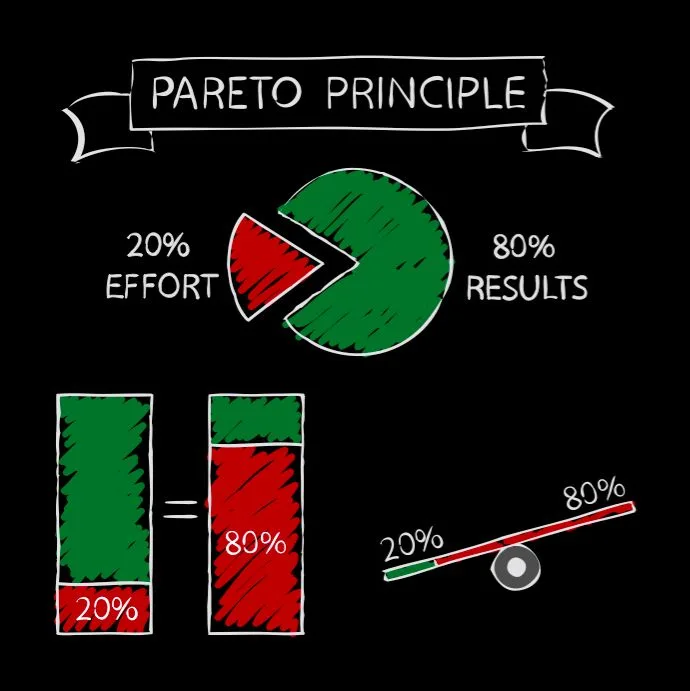
The Pareto Principle states that roughly 80% of outcomes come from 20% of causes, a pattern that appears across business, productivity, and nature.
What has been corrected on this page?
Every accepted correction to this page is recorded with the exact change, so readers can see how the page improved over time.
-
Corrected six overstated or unverifiable claims: flagged the Pareto pea-pod garden story as a later embellishment rather than documented history (his actual observation concerned income and wealth distribution); qualified the Microsoft '20% of bugs cause 80% of crashes' figure as an oft-quoted internal observation; softened 'nearly universal' 80/20 customer-revenue framing to a common tendency with wide variation; replaced a specific, unverifiable Gruber NEJM 2012 Medicare citation (34 million beneficiaries, 22%) with the well-established general fact that health spending is highly concentrated (AHRQ and Medicare analyses); softened the Salesforce universal product-analytics example; and generalized an unverified-looking Vodafone UK case study (with a named commercial director and precise 18%/76% figures) to the common telecom pattern.
The genuine, verifiable items (US income shares of about 52% and 21%; the Mockus et al. 2002 defect-concentration study; Reichheld's loyalty research) were left intact.
What the page claimedThe article told the pea-pod discovery story, gave a Microsoft 80%-of-crashes figure, called the 80/20 customer rule nearly universal, cited a Gruber NEJM 2012 Medicare study, used Salesforce and Spotify as universal examples, and presented a Vodafone UK case with a named executive and 18%/76% figures.
What was correctedCorrected the anecdote, qualified the universal claims, replaced the unverifiable NEJM citation with a sourced general statement, and generalized the unverified-looking case studies, while keeping the verifiable statistics and studies.
Why: The pea-pod story is apocryphal and several case studies and the NEJM citation could not be verified. Corrections remove or generalize the unverifiable specifics and keep the genuine ones rather than inventing sources.
View the full record →
Who checked this page?
1 contributor has checked "What Is the Pareto Principle: The 80/20 Rule Explained" on When Notes Fly. Each name below links to that person's public CitePep profile, where every contribution they have made is listed with the exact change they proposed.