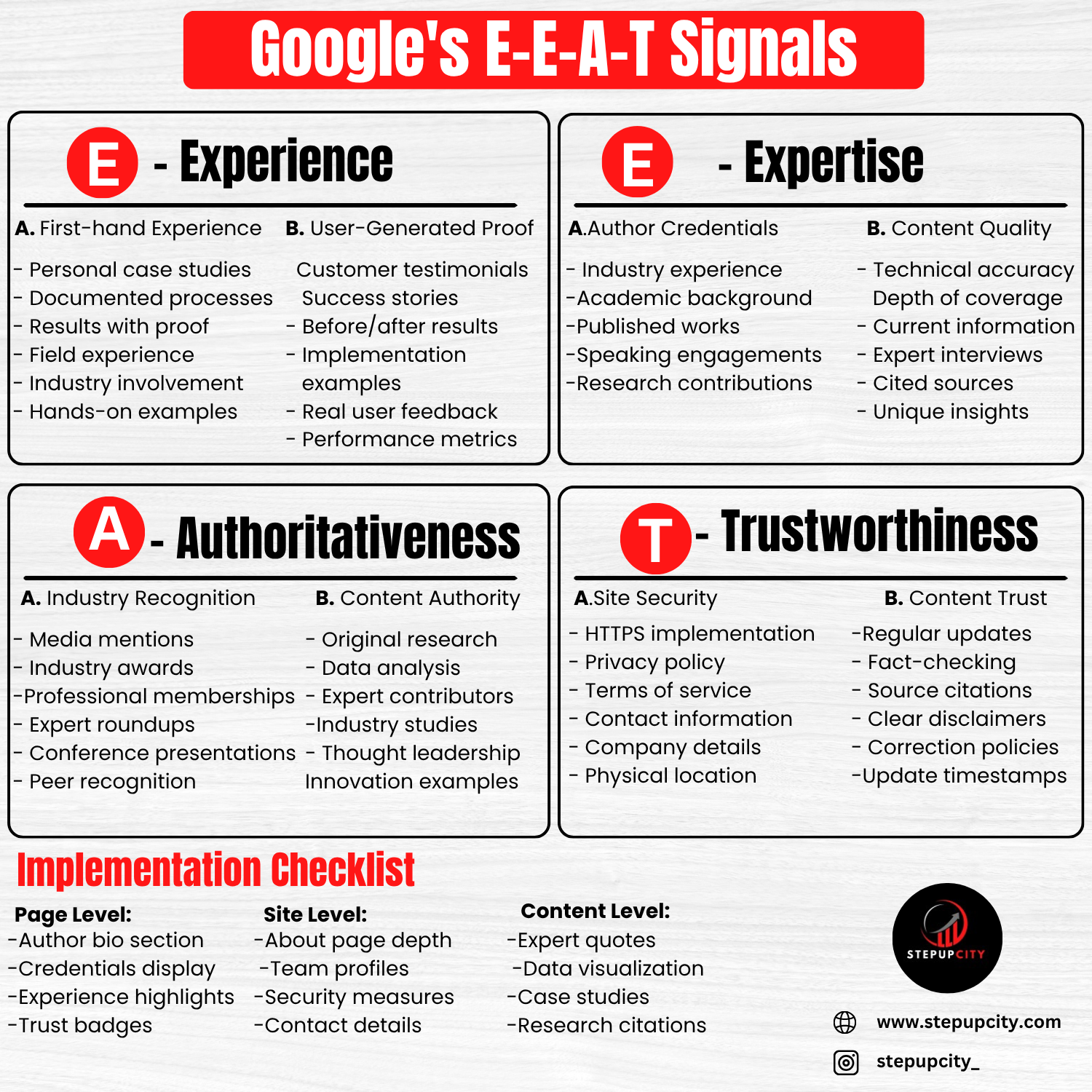
Content Quality Signals Explained
Understand the E-E-A-T framework for assessing content quality and its importance for SEO.
What is this page about?
An explainer of the content quality signals search engines reward, opening with Google's 2018 Medic update that penalized unsigned, uncredentialed, poorly sourced health sites while rewarding credentialed institutional ones. It covers the E-E-A-T framework (experience, expertise, authoritativeness, trustworthiness) in depth, what comprehensive content means (subtopic coverage, semantic depth), evidence and citation, user-behavior signals like satisfaction and click-through, and practical quality improvement via content audits, authorship infrastructure, and the helpful-content framework.
What has been corrected on this page?
Every accepted correction to this page is recorded with the exact change, so readers can see how the page improved over time.
-
The August 2018 Google core update communications were authored by Danny Sullivan (Google's Search Liaison), not 'Danny Roth.'
BeforeRoth, Danny. "More details about the August 2018 core algorithm update."
AfterSullivan, Danny. "More details about the August 2018 core algorithm update."
Why: The August 2018 Google core update communications were authored by Danny Sullivan (Google's Search Liaison), not Danny Roth. Verified fix already live in bibliography; no leftover instances found in faq/excerpt/meta.
View the full record →
Who checked this page?
1 contributor has checked "Content Quality Signals Explained" on When Notes Fly. Each name below links to that person's public CitePep profile, where every contribution they have made is listed with the exact change they proposed.