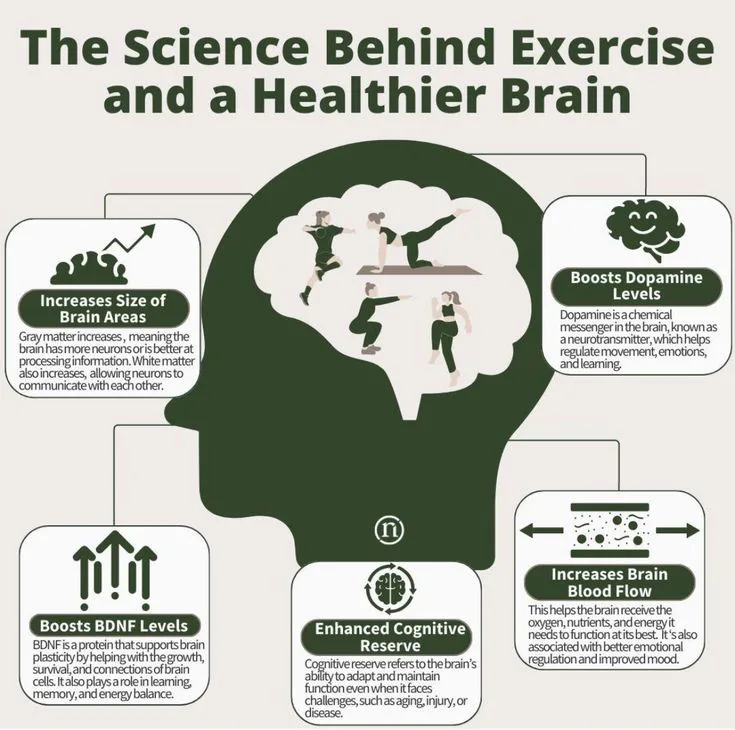
Why Exercise Is Beneficial for Brain Health
Understand how exercise reshapes the brain, boosts mood, and enhances memory through neuroscience.
What has been corrected on this page?
Every accepted correction to this page is recorded with the exact change, so readers can see how the page improved over time.
-
2 corrections applied: Correct study counts for Singh et al. 2023 umbrella review (97 reviews, 1,039 trials, 128,119 participants) | Published SMILE follow-up relapse rates were ~8% (exercise) vs ~38% (sertraline)
BeforeFAQ (Is exercise as effective as antidepressants for depression?): '...A 2023 BMJ meta-analysis of 218 trials found exercise highly effective, comparable to or better than medication for many presentations.'
AfterFAQ (Is exercise as effective as antidepressants for depression?): '...A 2023 BMJ meta-analysis (Singh et al.), an overview of 97 systematic reviews covering 1,039 trials, found exercise highly effective, comparable to or better than medication for many presentations.'
Why: Body content and bibliography already correctly described the Singh et al. 2023 BMJ study as an overview of 97 systematic reviews covering 1,039 trials and 128,119 participants, and already correctly gave the SMILE trial relapse rates as ~8% (exercise) vs ~38% (sertraline). But the FAQ JSON-LD field still cited the stale unverified figure of '218 trials' with no mention of the true 97-review/1,039-trial structure. Corrected the FAQ to match the article's own verified figures.
View the full record →
Who checked this page?
1 contributor has checked "Why Exercise Is Beneficial for Brain Health" on When Notes Fly. Each name below links to that person's public CitePep profile, where every contribution they have made is listed with the exact change they proposed.