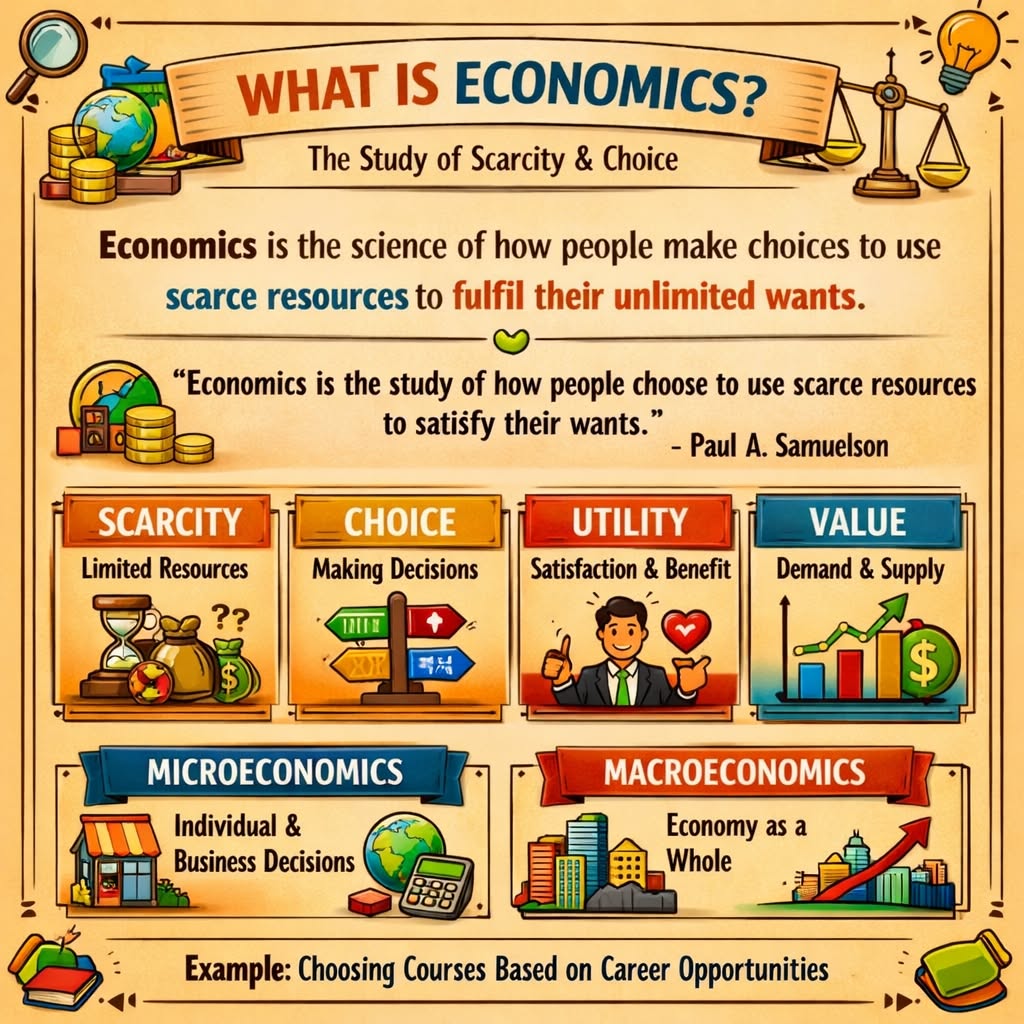
What Is Labor Economics?
Labor economics studies how wages are determined, why workers get paid what they do, and how labor markets function.
What has been corrected on this page?
Every accepted correction to this page is recorded with the exact change, so readers can see how the page improved over time.
-
Acemoglu-Restrepo robots paper appeared in Journal of Political Economy (2020), not AER (2019)
BeforeTheir 2019 American Economic Review paper found that each additional robot per thousand workers reduced the employment-to-population ratio by 0.2 percentage points and wages by 0.4 percentage points in the most affected commuting zones.
AfterTheir 2020 Journal of Political Economy paper found that each additional robot per thousand workers reduced the employment-to-population ratio by 0.2 percentage points and wages by 0.4 percentage points in the most affected commuting zones.
Why: Body text was already correctly fixed to '2020 Journal of Political Economy'. However the FAQ JSON-LD schema still contained the stale 'Their 2019 AER paper found...' fabrication in the automation/task-model Q&A.
Fixed the FAQ answer to 'Their 2020 Journal of Political Economy paper found...', re-encoded using the reverse op sequence, PUT the post, and verified via re-fetch + re-decode that the FAQ array (7 entries) is valid, contains the corrected citation, and no longer contains the stale one. Article has no separate bibliography section.
View the full record →
Who checked this page?
1 contributor has checked "What Is Labor Economics?" on When Notes Fly. Each name below links to that person's public CitePep profile, where every contribution they have made is listed with the exact change they proposed.