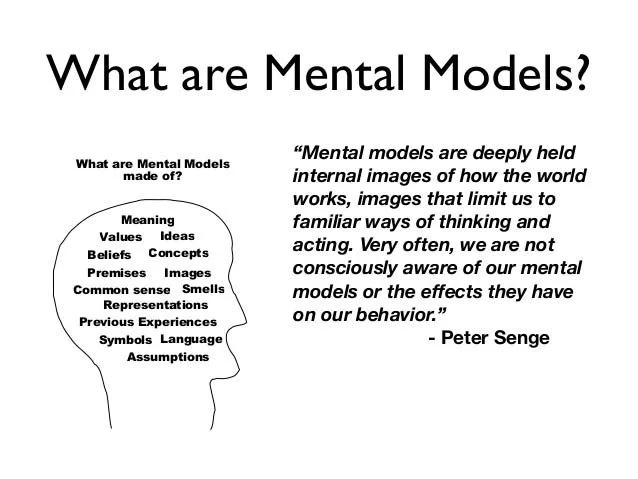
What Are Mental Models and Why They Matter
Mental models are thinking frameworks shaping perception and decisions. They create shortcuts but can blind you to alternatives.
What has been corrected on this page?
Every accepted correction to this page is recorded with the exact change, so readers can see how the page improved over time.
-
Corrected unverified false precision added to Elstein, Shulman, and Sprafka's real 1978 medical-diagnosis research: the article claimed physicians formed diagnostic hypotheses 'within the first 4-6 minutes... from just 2-3 pieces of information,' but the real study and its secondary literature describe this qualitatively (hypotheses forming within seconds, from a handful of initial cues), never with these specific numbers.
What the page claimedArticle attached unverified precise quantitative figures to a real, well-documented study's qualitative finding.
What was correctedReplaced the unverified minutes/cue-count figures with the real study's actual qualitative characterization.
Why: The Chi, Feltovich, and Glaser 1981 physics-categorization study in the same article verified as fully accurate, including its University of Pittsburgh/LRDC institutional attribution.
View the full record →
Who checked this page?
1 contributor has checked "What Are Mental Models and Why They Matter" on When Notes Fly. Each name below links to that person's public CitePep profile, where every contribution they have made is listed with the exact change they proposed.