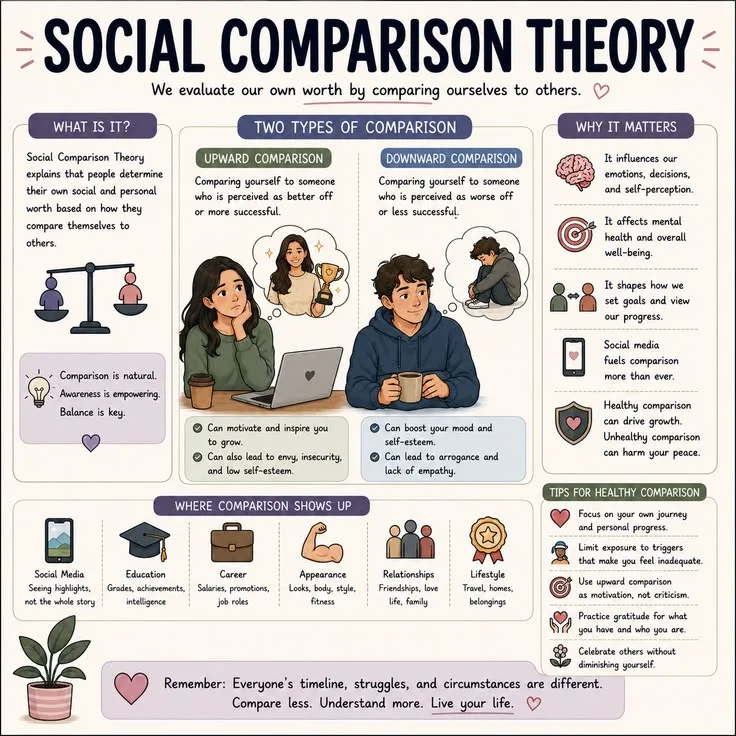
Understanding Social Comparison Theory and Its Effects
Silver medalists often display less happiness than bronze winners due to upward comparisons, highlighting the impact of social comparison.
What has been corrected on this page?
Every accepted correction to this page is recorded with the exact change, so readers can see how the page improved over time.
-
3 corrections applied: Wrong author names for the 2014 paper; corrected to the actual authors as in the reference list. | Wrong in-text journal; the review appeared in Organizational Behavior and Human Decision Processes. | Lead author's first name is wrong; corrected to Jonathan Gardner.
BeforeNicole Vogel, Rose Marie Ward, and Jeffrey Rose published "Social Comparison..." study in 2014; the review appeared without journal name in text; lead author was Andrew Gardner.
AfterErin A. Vogel, Jason P. Rose, Lindsay R. Roberts, and Katheryn Eckles published the 2014 Facebook social-comparison study; the 2007 review is cited as appearing in Organizational Behavior and Human Decision Processes; the wellbeing study lead author is Jonathan Gardner.
Why: Verified live: all 3 corrections (author names, journal name, lead author first name) already present in article content. FAQ JSON-LD checked and found clean (already used correct short-form author names, no fabrication).
View the full record →
Who checked this page?
1 contributor has checked "Understanding Social Comparison Theory and Its Effects" on When Notes Fly. Each name below links to that person's public CitePep profile, where every contribution they have made is listed with the exact change they proposed.