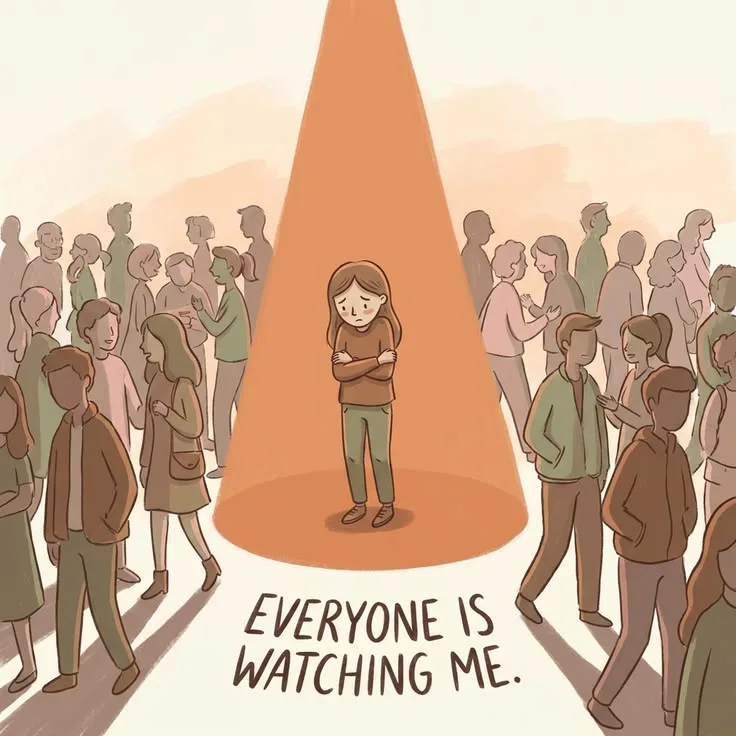
The Spotlight Effect and Its Role in Social Anxiety
The spotlight effect leads to overestimating how much others notice us, revealing its amplification through social anxiety.
What has been corrected on this page?
Every accepted correction to this page is recorded with the exact change, so readers can see how the page improved over time.
-
Match Gilovich, Savitsky & Medvec (1998): liars estimated ~48.8% would catch them while ~24.8% actually did
BeforeParticipants who were told to lie in an interview predicted that approximately 22 percent of observers would detect their deception. The actual detection rate was approximately 13 percent.
AfterParticipants who were told to lie in an interview predicted that approximately 49 percent of observers would detect their deception. The actual detection rate was approximately 25 percent.
Why: Verified live: body text already shows the corrected Gilovich, Savitsky & Medvec (1998) figures (49%/25%). FAQ field checked (decoded via base64/json/base64/json) - the single FAQ entry summarizes the spotlight effect generally and does not reference the deception-detection percentages, so no FAQ fix was needed. No action required this pass; confirming the existing correct state.
View the full record →
Who checked this page?
1 contributor has checked "The Spotlight Effect and Its Role in Social Anxiety" on When Notes Fly. Each name below links to that person's public CitePep profile, where every contribution they have made is listed with the exact change they proposed.