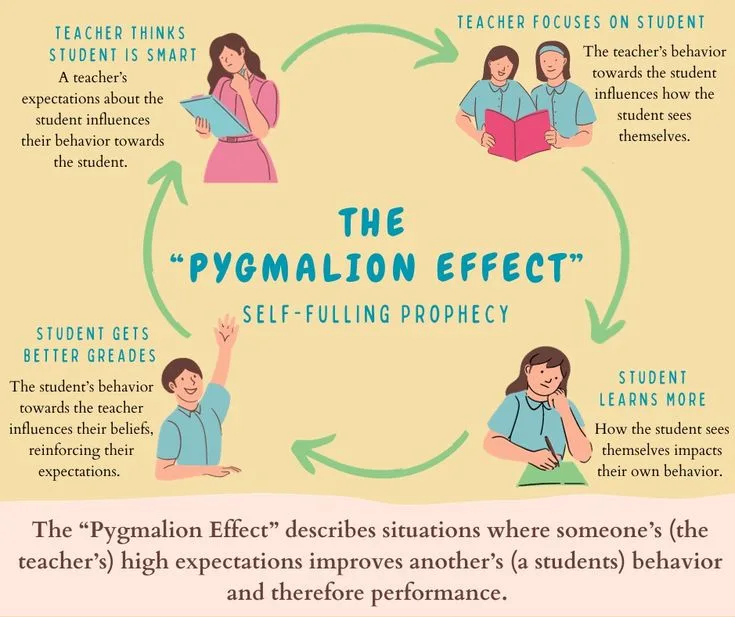
The Pygmalion Effect: Expectations in Education and Work
The Pygmalion effect demonstrates how expectations can influence performance across educational and workplace environments.
What has been corrected on this page?
Every accepted correction to this page is recorded with the exact change, so readers can see how the page improved over time.
-
2 corrections applied: Co-author is Jennifer L. Eberhardt, not 'Jason Eberhardt' | Rosenthal & Rubin's 345-study meta-analysis was published in 1978, not 1998
Before(1) Jason Okonofua and Jason Eberhardt (2015), publishing in Psychological Science... (2) A comprehensive 1998 meta-analysis by Rosenthal and Rubin examined 345 studies...
After(1) Jason Okonofua and Jennifer Eberhardt (2015), publishing in Psychological Science... (2) A comprehensive 1978 meta-analysis by Rosenthal and Rubin examined 345 studies...
Why: Verified live: body text already reads 'Jason Okonofua and Jennifer Eberhardt (2015)' and 'a comprehensive 1978 meta-analysis by Rosenthal and Rubin'. FAQ field decoded and checked, no reference to either fabrication. No further action needed.
View the full record →
Who checked this page?
1 contributor has checked "The Pygmalion Effect: Expectations in Education and Work" on When Notes Fly. Each name below links to that person's public CitePep profile, where every contribution they have made is listed with the exact change they proposed.