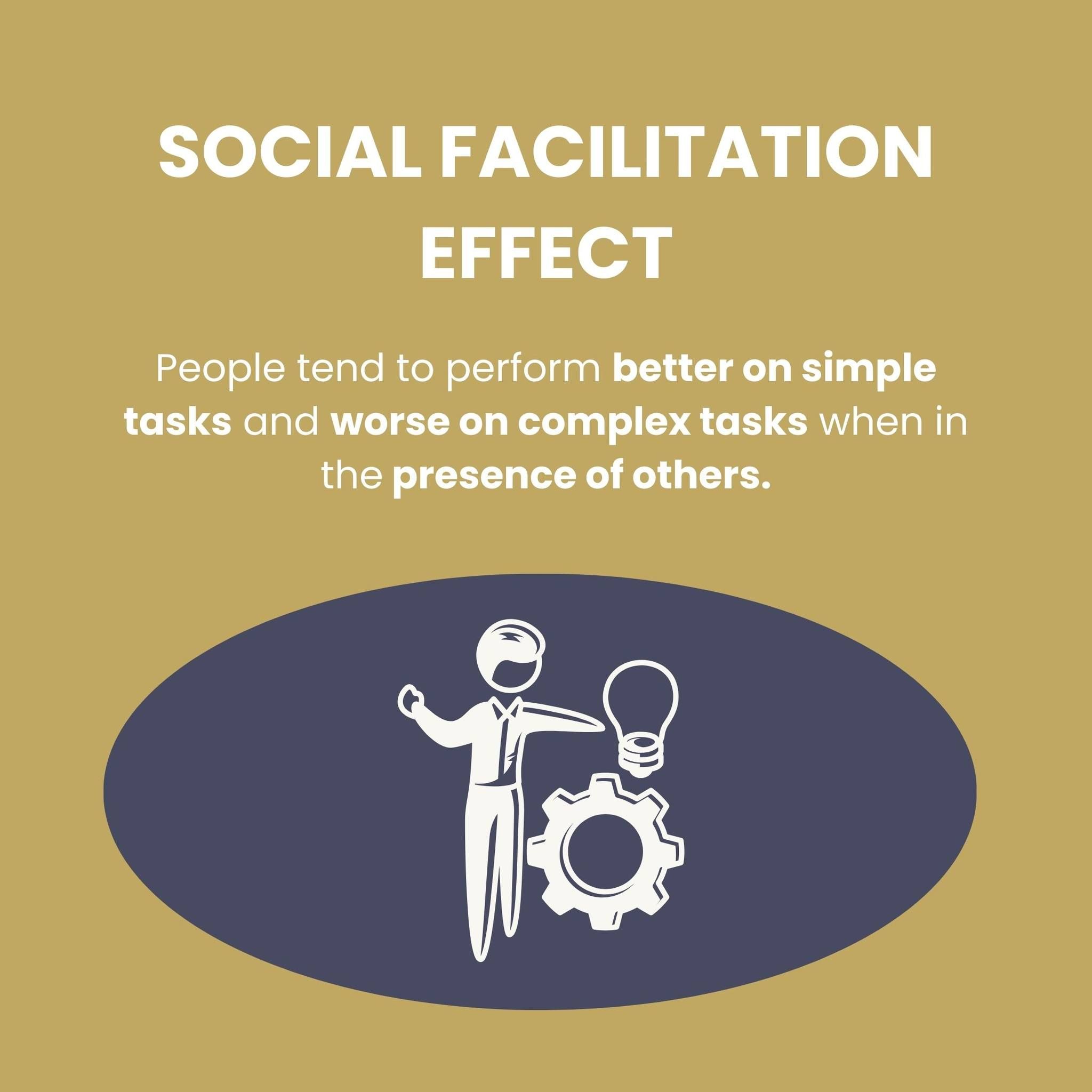
Social Facilitation: When Others Make Us Better, or Worse
Social facilitation explains why others' presence improves performance on easy tasks but impairs it on difficult ones.
What has been corrected on this page?
Every accepted correction to this page is recorded with the exact change, so readers can see how the page improved over time.
-
2 corrections applied: Wrong journal; the pool-table study appeared in Replications in Social Psychology. | Wrong journal; Guerin & Innes (1982) appeared in the British Journal of Social Psychology.
BeforeJames Michaels, Cynthia Blommel, Rose Brocato, Russell Linkous, and John Rowe... published a 1982 study in the Journal of Experimental Social Psychology [for both the pool-table study and Guerin & Innes].
AfterJames Michaels et al. published their pool-table study in Replications in Social Psychology (1982); Guerin and Innes published their 1982 study in the British Journal of Social Psychology.
Why: Verified live: both corrections are already present in body text and bibliography (Michaels et al. 1982 correctly cited to Replications in Social Psychology; Guerin & Innes 1982 correctly cited to British Journal of Social Psychology). FAQ field checked (decoded via base64/json/base64/json) - no mention of Michaels, Guerin, or either journal name in any FAQ entry. No action required this pass; confirming the existing correct state.
View the full record →
Who checked this page?
1 contributor has checked "Social Facilitation: When Others Make Us Better, or Worse" on When Notes Fly. Each name below links to that person's public CitePep profile, where every contribution they have made is listed with the exact change they proposed.