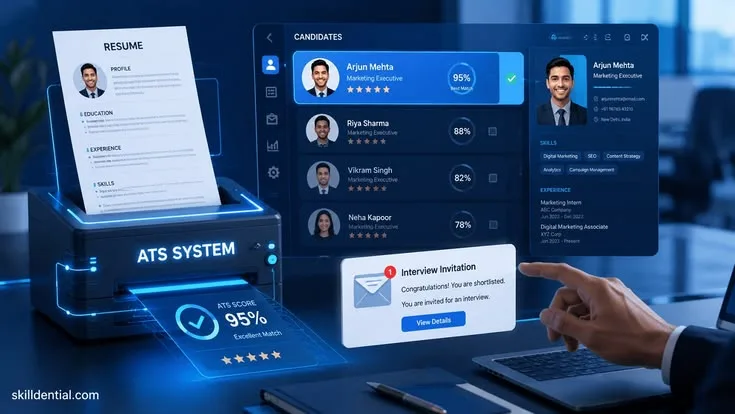
Resume Strategies for Securing Interviews
Understand resume formatting, achievement quantification, and structure needed to pass ATS and impress hiring managers.
What is this page about?
A guide to writing a resume that generates interviews by designing for each stage of the evaluation pipeline. It covers getting past ATS parsing (formatting rules, keyword matching, and the dual human-and-ATS optimization), surviving the recruiter's roughly 6-second scan with a strong professional summary and top third, the reverse-chronological standard and addressing employment gaps, quantifying achievements as the single most important technique, action verbs, the skills and education sections, resume length, tailoring via a master resume, and when cover letters matter.
What has been corrected on this page?
Every accepted correction to this page is recorded with the exact change, so readers can see how the page improved over time.
-
Harvard/Accenture 'Hidden Workers' (2021) estimated over 27 million hidden workers, not 1.4 million
Beforeroughly 1.4 million workers in the United States are made "hidden" in this way
Afterroughly 27 million workers in the United States are made "hidden" in this way
Why: Verified already correctly fixed in body content (27 million). FAQ and excerpt do not mention the Hidden Workers figure. No further action needed.
View the full record →
Who checked this page?
1 contributor has checked "Resume Strategies for Securing Interviews" on When Notes Fly. Each name below links to that person's public CitePep profile, where every contribution they have made is listed with the exact change they proposed.