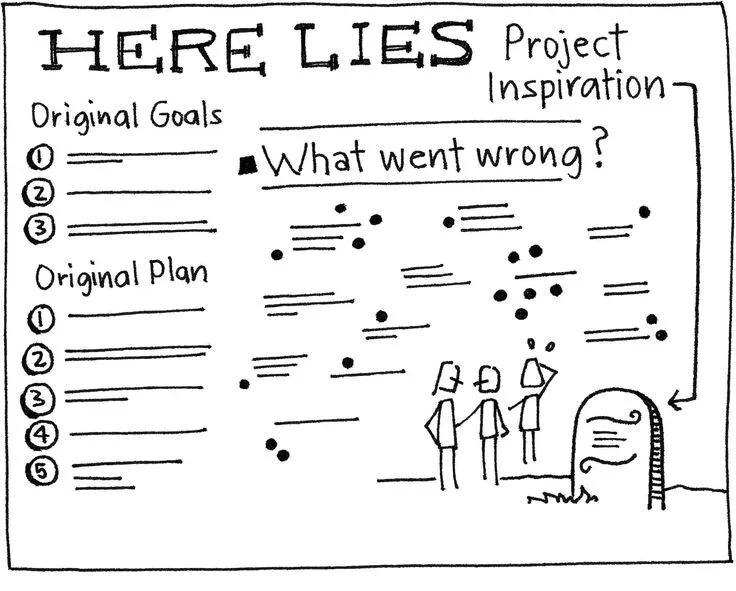
Pre-Mortem Analysis: Anticipating Project Failures
Learn how pre-mortem analysis helps identify potential project failures by imagining a negative outcome.
What has been corrected on this page?
Every accepted correction to this page is recorded with the exact change, so readers can see how the page improved over time.
-
Corrected a date error: Gary Klein's pre-mortem technique was popularized in his 2007 Harvard Business Review article 'Performing a Project Premortem,' not developed by him in 1989 - 1989 is the year of the Mitchell, Russo, and Pennington study that established the prospective-hindsight effect Klein's technique builds on. Verified accurate and left in place: the Mitchell/Russo/Pennington 1989 study description, the Klein HBR 2007 group-norm quotation, and the Klein 2015 Naturalistic Decision Making interview quotation.
What the page claimedThe article stated Gary Klein developed the pre-mortem technique in 1989, the same year as the Mitchell/Russo/Pennington prospective-hindsight study his technique is based on.
What was correctedCorrected Klein's pre-mortem to its 2007 Harvard Business Review origin, distinguishing it from the 1989 academic study it builds on.
Why: The two distinct dates (1989 academic study, 2007 practitioner technique) had been conflated into one. Correction separates them using the article's own correctly-cited 2007 HBR quotation.
View the full record →
Who checked this page?
1 contributor has checked "Pre-Mortem Analysis: Anticipating Project Failures" on When Notes Fly. Each name below links to that person's public CitePep profile, where every contribution they have made is listed with the exact change they proposed.