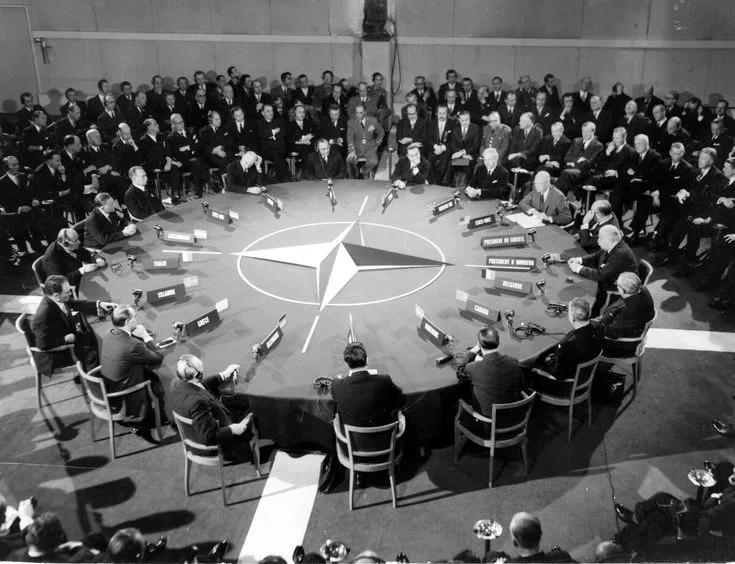
How the Cold War Influenced Today's World Dynamics
Examine the Cold War's far-reaching impact, shaping ideologies, international relations, and technological advancements.
What has been corrected on this page?
Every accepted correction to this page is recorded with the exact change, so readers can see how the page improved over time.
-
2 corrections applied: James Baker was US Secretary of State, not NATO Secretary-General (who was Manfred Worner in 1990) | Belavezha Accords were signed by 3 republics; expansion to 11 came via the Alma-Ata Protocol on Dec 21, 1991
BeforeNATO Secretary-General James Baker told Gorbachev in 1990 that NATO would not expand "one inch eastward"... when 11 republics signed the Belavezha Accords on December 8, 1991, creating the Commonwealth of Independent States.
AfterUS Secretary of State James Baker told Gorbachev in 1990 that NATO would not expand "one inch eastward"... the Soviet Union formally dissolved when Russia, Ukraine, and Belarus signed the Belavezha Accords on December 8, 1991, creating the Commonwealth of Independent States that eight more republics joined under the Alma-Ata Protocol on December 21.
Why: Verified both fixes are live in the article body: James Baker correctly identified as US Secretary of State (not NATO Secretary-General), and the Belavezha Accords correctly attributed to Russia, Ukraine, and Belarus with the 11-republic expansion correctly moved to the Alma-Ata Protocol. No stale occurrences found in bibliography or FAQ. Backfilling record with confirmed correct text; no further edits needed.
View the full record →
Who checked this page?
1 contributor has checked "How the Cold War Influenced Today's World Dynamics" on When Notes Fly. Each name below links to that person's public CitePep profile, where every contribution they have made is listed with the exact change they proposed.