Heuristics Explained
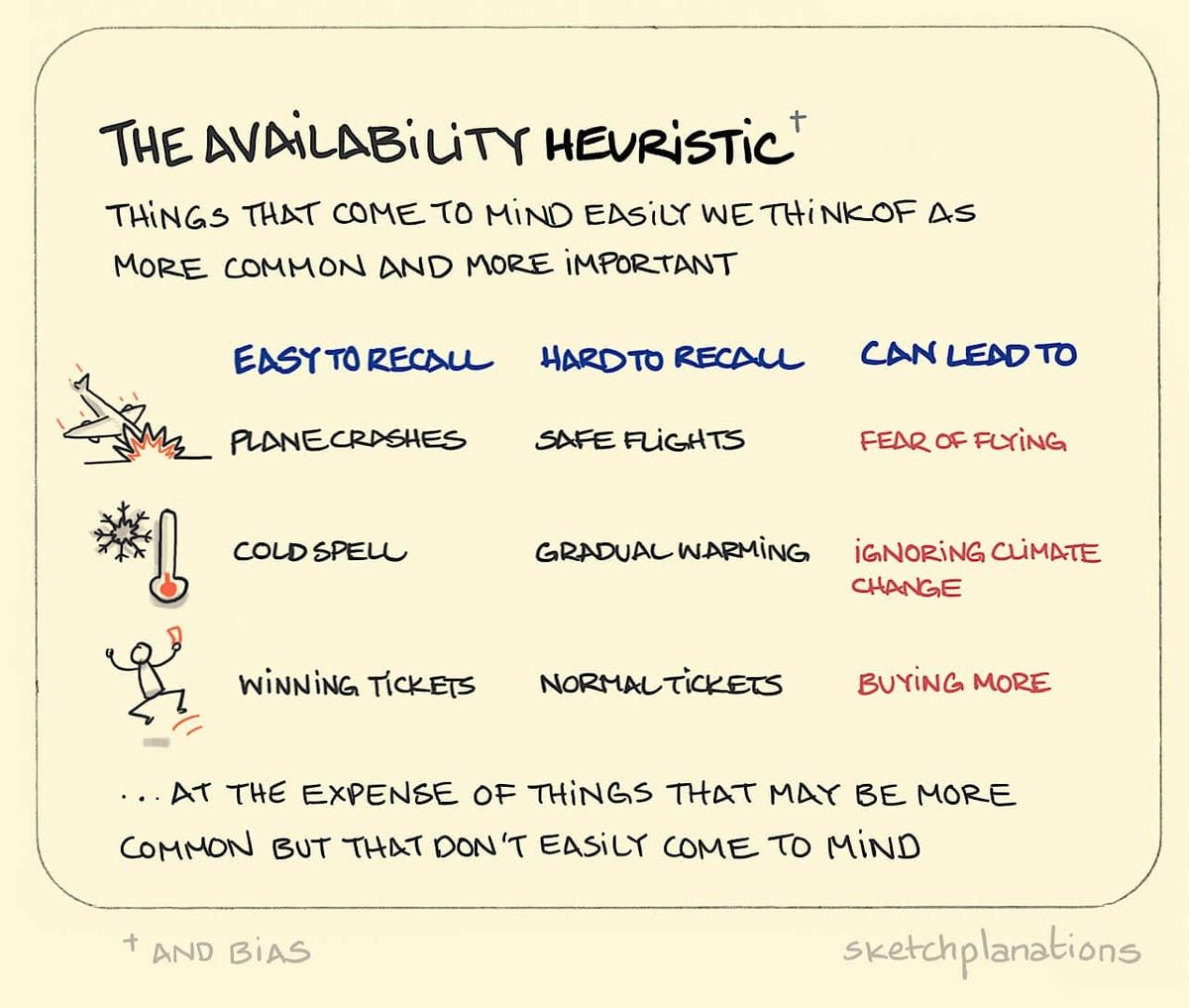
Heuristics are mental shortcuts for fast decisions: availability judges by what comes to mind, representativeness by similarity to stereotypes.
What has been corrected on this page?
Every accepted correction to this page is recorded with the exact change, so readers can see how the page improved over time.
-
Corrected three citation problems: an Amazon recommendation-purchase figure misattributed to Amazon's own reporting when it actually traces to a disputed 2013 McKinsey estimate; a precise 25 percent crew-accident statistic attached to Robert Helmreich's real aviation safety research with no traceable source; and a heart-attack diagnostic heuristic study correctly described but misdated to a 2007 Psychological Science paper when it is actually Green and Mehr's 1997 study.
Before35 percent recommendation-purchase figure attributed directly to Amazon; 25 percent crew-accident figure attributed to Helmreich with no real source; heart-attack diagnosis study cited as 2007 Psychological Science.
AfterRecommendation-purchase figure now correctly attributed to a 2013 McKinsey estimate, noted as unverified; crew-accident claim softened to what Helmreich's real research actually supports, without the unverified percentage; diagnostic heuristic study now correctly cited as Green and Mehr, 1997.
Why: Verified each named-study and named-statistic claim against the real research literature; found real researchers and real phenomena with unverified, misattributed, or mis-cited specifics layered on top.
View the full record →
Who checked this page?
1 contributor has checked "Heuristics Explained" on When Notes Fly. Each name below links to that person's public CitePep profile, where every contribution they have made is listed with the exact change they proposed.