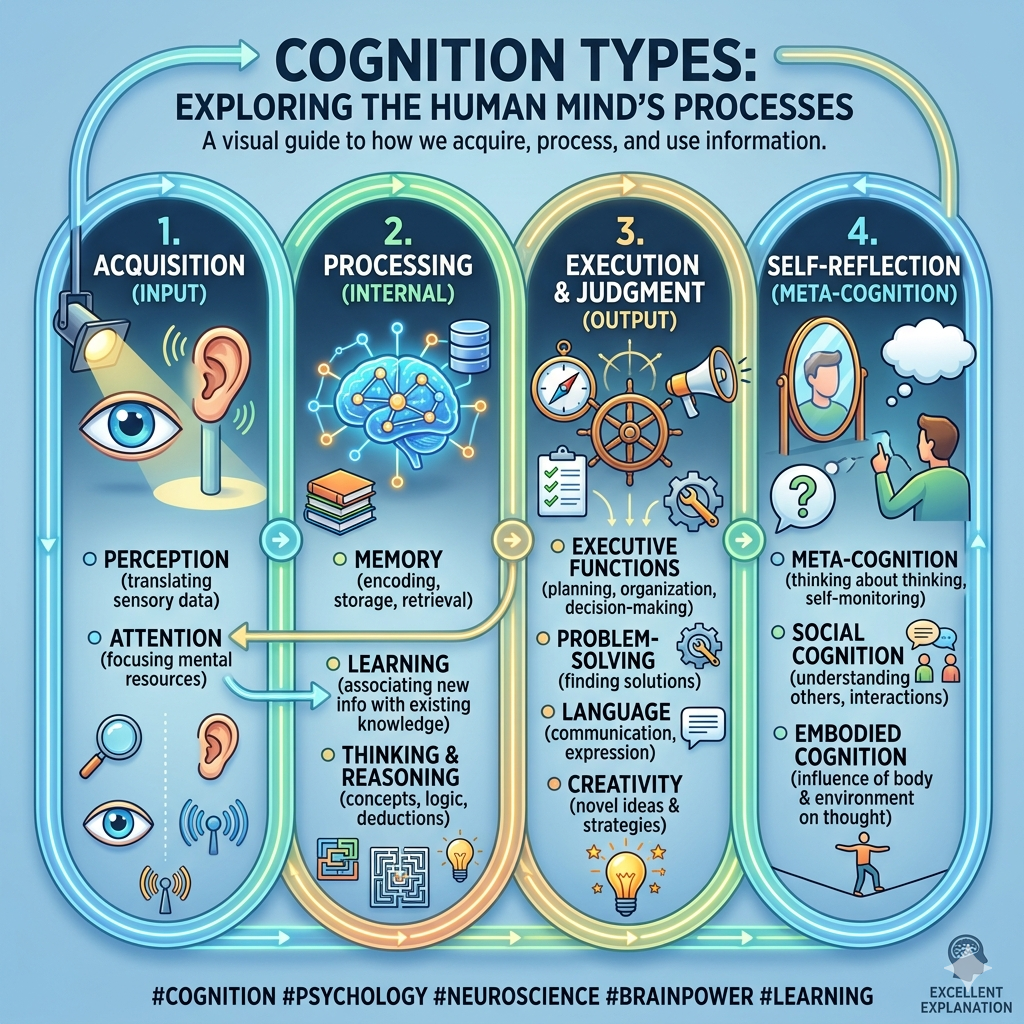
Evolution of Cognitive Psychology
Cognitive revolution in the 1950s rejected behaviorism. Computers provided metaphors. Focus shifted to mental processes and information processing.
What is this page about?
A history of the cognitive revolution that overthrew behaviorism, explaining why psychology spent three mid-century decades refusing to study the mind (the failure of introspectionism, Watson's manifesto, Skinner's radical behaviorism) and how it changed. It covers the converging 1950s developments, Chomsky's review of Skinner, the computer-as-mind metaphor, Miller's magical number seven, and the 1956 MIT symposium, then Neisser naming the field, the study of memory and attention, schema theory, the merger with neuroscience, the impact on education, and current challenges like embodiment.
What has been corrected on this page?
Every accepted correction to this page is recorded with the exact change, so readers can see how the page improved over time.
-
2 corrections applied: The flashbulb-memory researcher (Neisser & Harsch Challenger study) is Ulric Neisser, not John Neisser; the article names him correctly elsewhere. | No 1993 Klein book titled 'A Recognition-Primed Decision' exists; his book presenting the RPD model is Sources of Power (MIT Press, 1998).
BeforeJohn Neisser's subsequent empirical work on flashbulb memories; The findings, published in Klein's 1993 book A Recognition-Primed Decision
AfterUlric Neisser's subsequent empirical work on flashbulb memories; The findings, published in Klein's 1998 book Sources of Power
Why: Verified live: both corrections (Ulric Neisser's correct first name, and Klein's 1998 Sources of Power book instead of a nonexistent 1993 title) are already correctly present in the article body and bibliography. FAQ/excerpt/meta_description/seo_keywords have no residual mention of either fabrication. No further action needed.
View the full record →
Who checked this page?
1 contributor has checked "Evolution of Cognitive Psychology" on When Notes Fly. Each name below links to that person's public CitePep profile, where every contribution they have made is listed with the exact change they proposed.