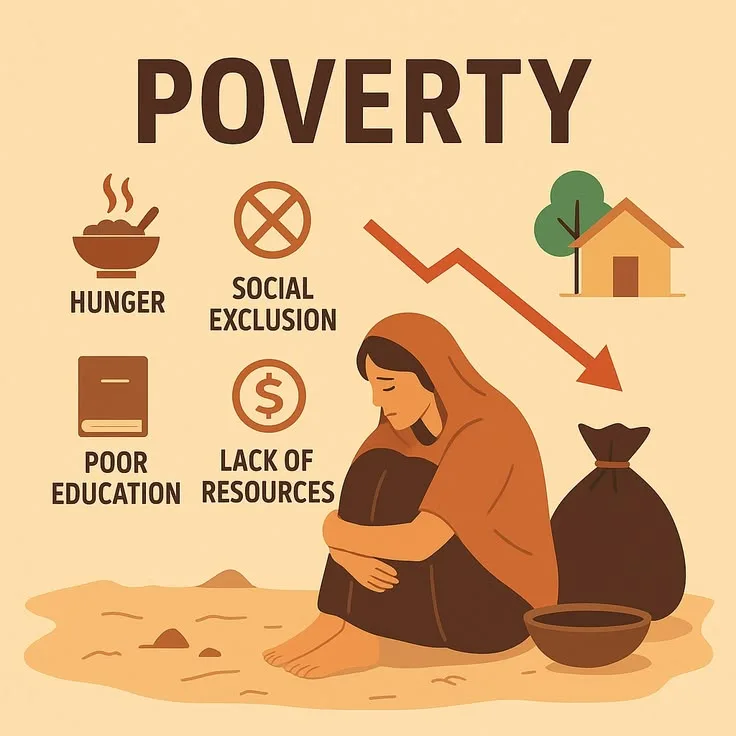
Economic Insights on How Poverty Traps Operate
Discover the mechanisms of poverty traps through cognitive research, financial models, and interventions.
What has been corrected on this page?
Every accepted correction to this page is recorded with the exact change, so readers can see how the page improved over time.
-
2 corrections applied: Correct author of 1956 low-level-equilibrium-trap model: Richard R. Nelson, not Robert Nelson | Schultz (2004) PROGRESA study was published in the Journal of Development Economics, not the World Bank Economic Review
BeforeRobert Nelson's 1956 low-level equilibrium trap formalized...; T. Paul Schultz's 2004 evaluation in the World Bank Economic Review analyzed the program's randomized rollout
AfterRichard R. Nelson's 1956 low-level equilibrium trap formalized...; T. Paul Schultz's 2004 evaluation in the Journal of Development Economics analyzed the program's randomized rollout
Why: Body content and bibliography already correctly fixed (Richard R. Nelson, Journal of Development Economics). But the FAQ (decoded via 4-step op-sequence base64,json,base64,json) still had BOTH stale fabrications: 'Robert Nelson's 1956' and 'World Bank Economic Review'. Fixed both in the FAQ, re-encoded via the same op-sequence in reverse, PUT, and verified clean on re-fetch.
View the full record →
Who checked this page?
1 contributor has checked "Economic Insights on How Poverty Traps Operate" on When Notes Fly. Each name below links to that person's public CitePep profile, where every contribution they have made is listed with the exact change they proposed.