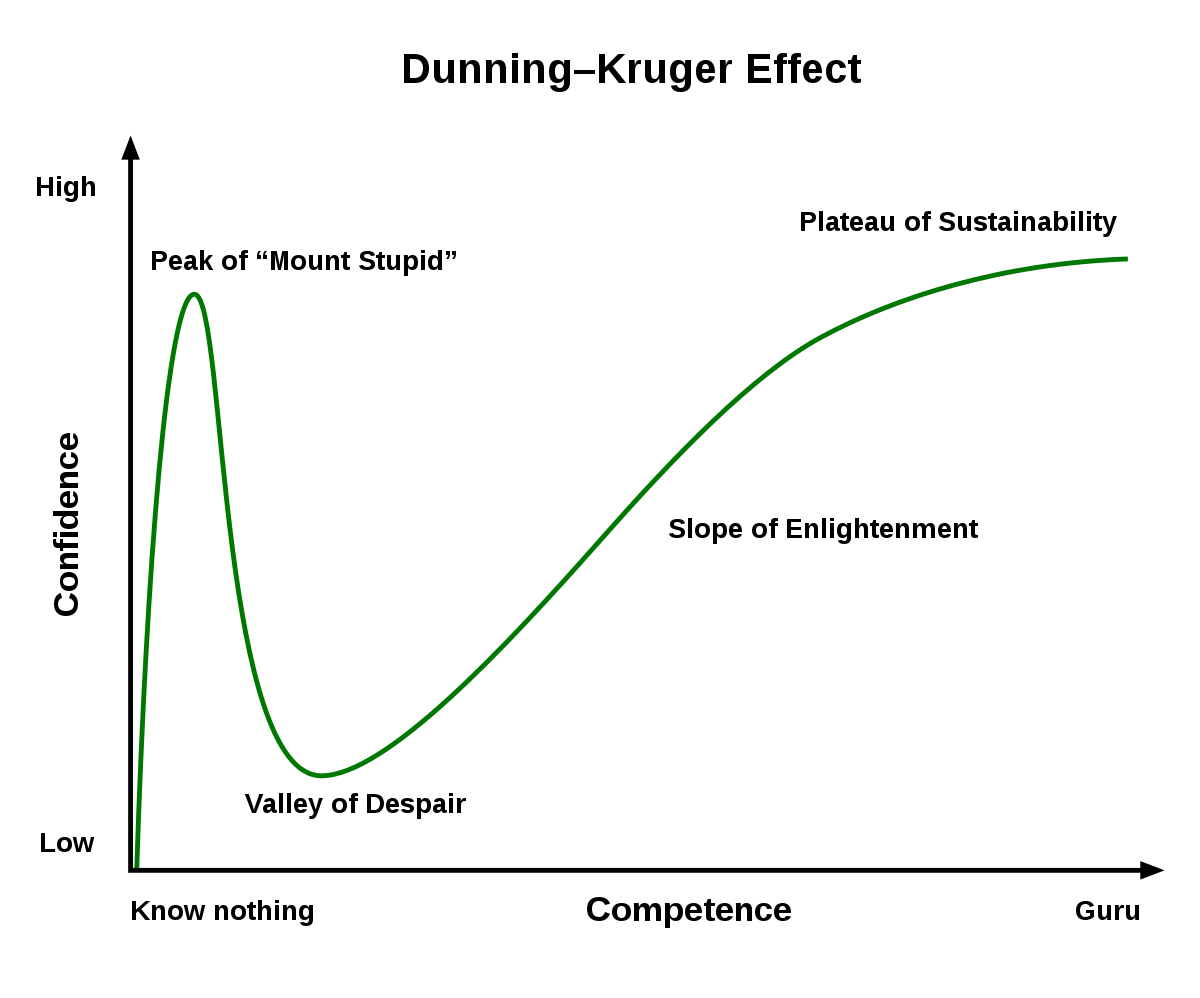
Dunning-Kruger Effect: Misjudging Competence
Discover how individuals with lower skills often overestimate their abilities.
What is this page about?
A deep dive into the Dunning-Kruger effect, the tendency for low-skilled people to overestimate their competence because the skills needed to perform are the same ones needed to judge performance, opening with the lemon-juice bank robber McArthur Wheeler who inspired Dunning's research. It explains the metacognition and calibration science and the double burden of not knowing you do not know, offers historical case studies (the Light Brigade, Kodak, Long-Term Capital Management, the Wakefield MMR study), the original study and its methodological critiques, and how to calibrate better.
What has been corrected on this page?
Every accepted correction to this page is recorded with the exact change, so readers can see how the page improved over time.
-
2 corrections applied: Dunning learned of the Wheeler case from a 1996 news item (commonly cited as the World Almanac); no Carnegie Mellon columnist 'Melvin Krosnick' is associated with it (unverified attribution). | Gignac & Zajenkowski (2020), 'The Dunning-Kruger effect is (mostly) a statistical artifact,' argues the pattern is largely a statistical/regression artifact, not a confirmation of DK predictions.
Before1996 newspaper column by Carnegie Mellon professor Melvin Krosnick (unverified attribution); framed a 2020 Gignac & Zajenkowski statistical-artifact critique as confirming Dunning-Kruger predictions
After1996 news item reprinted in the World Almanac (no Krosnick attribution); Gignac & Zajenkowski (2020) correctly described as arguing the classic pattern is largely a statistical artifact
Why: Verified live: both corrections already present in body content (World Almanac sourcing, no Krosnick mention, correct Gignac & Zajenkowski framing). FAQ, excerpt, meta_description, and seo_keywords also independently checked clean, no residual fabrication found anywhere on the post.
View the full record →
Who checked this page?
1 contributor has checked "Dunning-Kruger Effect: Misjudging Competence" on When Notes Fly. Each name below links to that person's public CitePep profile, where every contribution they have made is listed with the exact change they proposed.