Becoming a UX Designer in 2026: Your Pathway
Explore pathways to becoming a UX designer, including degree options and portfolio essentials.
What is this page about?
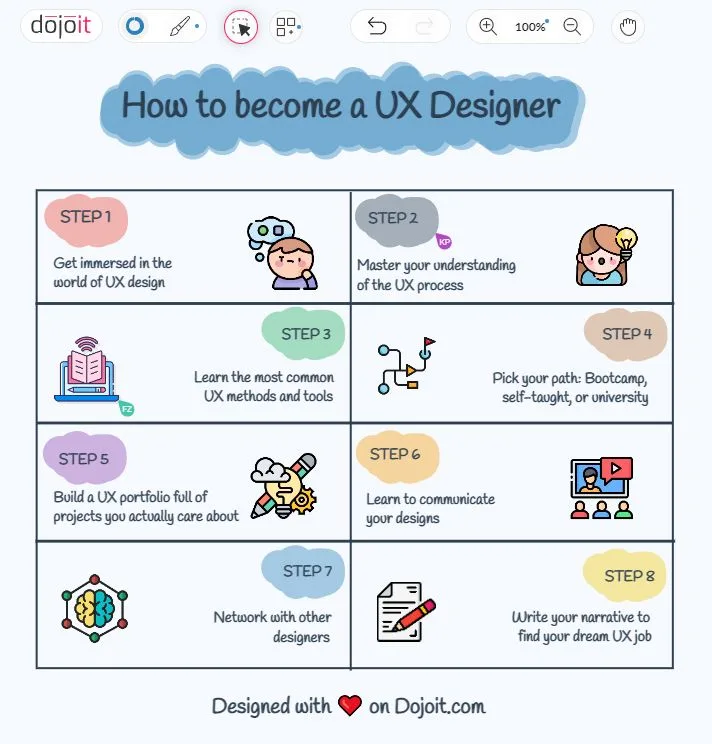
A guide to becoming a UX designer in 2026, noting the field is unusual in that hiring turns on a portfolio review rather than a credential. It assesses the 2025-2026 job market and how specialization creates opportunity, compares the degree, bootcamp, and self-taught routes, specifies what a portfolio must include (case-study structure and evaluation criteria, what to show with no professional experience), the tools to learn and in what order (Figma first, then research methods), salary expectations by stage, the adjacent-role advantage, and the common reasons portfolios get rejected.
What has been corrected on this page?
Every accepted correction to this page is recorded with the exact change, so readers can see how the page improved over time.
-
2 corrections applied: The 3rd edition (2006) is titled 'Information Architecture for the World Wide Web'; 'For the Web and Beyond' is the 4th edition (2015) | Title for the 3rd-edition Morville/Rosenfeld book is 'Information Architecture for the World Wide Web'; 'for the Web and Beyond' is the 4th ed. (adds Arango)
BeforeMorville, P., and Rosenfeld, L. (2006). Information Architecture for the World Wide Web (implying it was 'for the Web and Beyond', the 4th edition title)
AfterRosenfeld, L., and Morville, P. (2006). Information Architecture for the World Wide Web, 3rd Edition
Why: Live article body and bibliography already correctly cite the 3rd edition title with Rosenfeld listed first. Verified faq, no fabrication remaining.
View the full record →
Who checked this page?
1 contributor has checked "Becoming a UX Designer in 2026: Your Pathway" on When Notes Fly. Each name below links to that person's public CitePep profile, where every contribution they have made is listed with the exact change they proposed.