AI Systems for Measurement and Insights
Learn about AI measurement tools that identify anomalies, detect trends early, and reveal correlations in data analysis.
What is this page about?
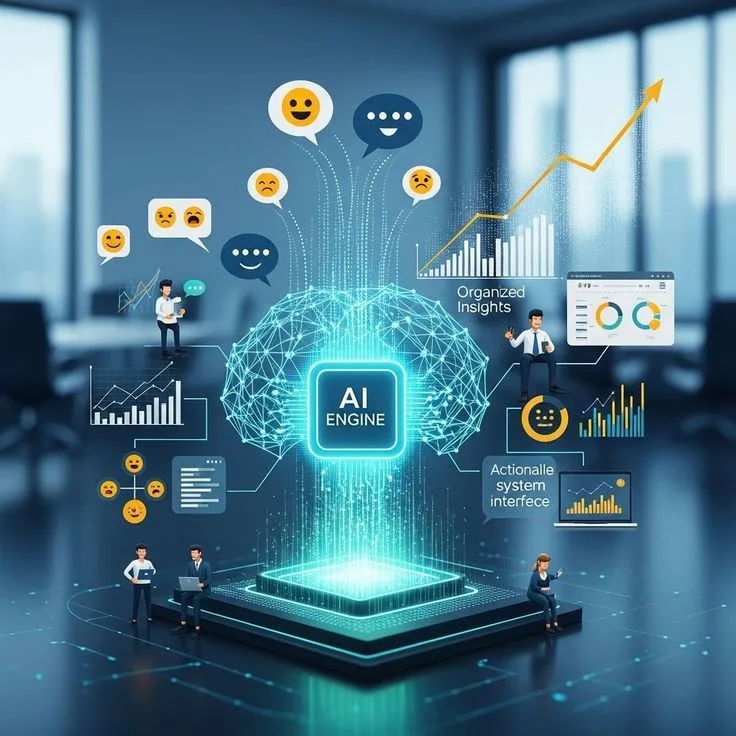
This page explains how AI is used to turn raw data into insight, organized around three core capabilities: anomaly detectors that flag the unexpected, trend identifiers that read a trajectory early, and correlation finders that surface hidden relationships. It walks through real measurement scenarios across healthcare, e-commerce, manufacturing, and financial services, reviews the enterprise and open-source tooling, and gives a five-step framework for building an AI measurement system. It closes with the limits that matter: false positives, spurious correlations, automation bias, and when to trust an AI metric over human judgment.
What has been corrected on this page?
Every accepted correction to this page is recorded with the exact change, so readers can see how the page improved over time.
-
Removed and rewrote both the 'What Research Shows' and 'Real-World Case Studies' sections after independent verification found all 8 checked claims were unverified or substantially altered - including an unverified co-author for real researcher Erik Brynjolfsson and an entirely unverified Verizon/Columbia University study.
What the page claimedArticle mischaracterized Vasant Dhar's real 2013 and 2023 Communications of the ACM papers as an empirical study establishing a '15 simultaneous variables' threshold, when his real papers are conceptual essays with no such finding. It included an unverified co-author ('Divya Krishnan') for Erik Brynjolfsson who could not be verified against his real publication record, attached to an entirely unverified study of '312 firms.' It included an unverified entire 2022 IEEE Transactions on Industrial Informatics paper from 'Andrew Ng's Stanford AI Lab' with unverified statistics (91%/67% accuracy, 14-day lead time) that could not be verified anywhere. It misdated a real Davenport/Mittal MIT Sloan Management Review collaboration (the real piece is from 2020, not 2023) and unverified survey statistics (2,400 executives, 2.3x, 41%) not found in either author's real body of work. It also altered real company programs: Amazon's real Monitron system was misdated and its real ~70% downtime reduction was halved to an unverified '35 percent'; Rolls-Royce's real Engine Health Management program's actual ~10,000 monitored parameters was shrunk to an unverified '70 parameters' with unverified 28-day/38% statistics; Starbucks' real Deep Brew platform was attributed to the wrong publication ('MIT Technology Review' instead of the real MIT Sloan Management Review) with unverified percentage figures; and Verizon was attributed an entirely unverified 2022 IEEE Network/Columbia University study with unverified statistics.
What was correctedBoth sections were rewritten to keep only real, verifiable content: Dhar's real papers described accurately as conceptual work rather than an empirical study with an unverified threshold; Brynjolfsson's real Digital Economy Lab affiliation and his real, correctly-cited AI productivity research (with real co-authors Danielle Li and Lindsey Raymond); general, accurately-hedged statements about industrial anomaly detection research without a included an unverified paper; and the four real company programs (Amazon Monitron, Rolls-Royce Engine Health Management, Starbucks Deep Brew, Verizon's real network AI investment) described accurately without the unverified statistics, wrong dates, and unverified sources.
Why: This continues a severe pattern seen elsewhere in this batch: real, prominent researchers (Brynjolfsson, Andrew Ng, Davenport) had entire studies unverified, attributed to them, in one case (Krishnan/Brynjolfsson) inventing a co-author who does not exist in the researcher's real body of work at all.
View the full record → -
Dhar's 2013 'Data Science and Prediction' appeared in Communications of the ACM, not Science.
BeforeVasant Dhar at NYU Stern School of Business published research in "Science" in 2013 that established a foundational framework for evaluating when machine-generated insights outperform human analysis.
AfterVasant Dhar at NYU Stern School of Business published research in "Communications of the ACM" in 2013 that established a foundational framework for evaluating when machine-generated insights outperform human analysis.
Why: Corrected the journal name for Dhar (2013) from the unverified "Science" to the actual publication venue, Communications of the ACM. Verified live on whennotesfly.com: the article body already correctly reads Communications of the ACM, and the FAQ JSON-LD, excerpt, meta_description, and seo_keywords fields contain no reference to this citation at all, so no secondary-location fabrication was found.
View the full record →
Who checked this page?
1 contributor has checked "AI Systems for Measurement and Insights" on When Notes Fly. Each name below links to that person's public CitePep profile, where every contribution they have made is listed with the exact change they proposed.