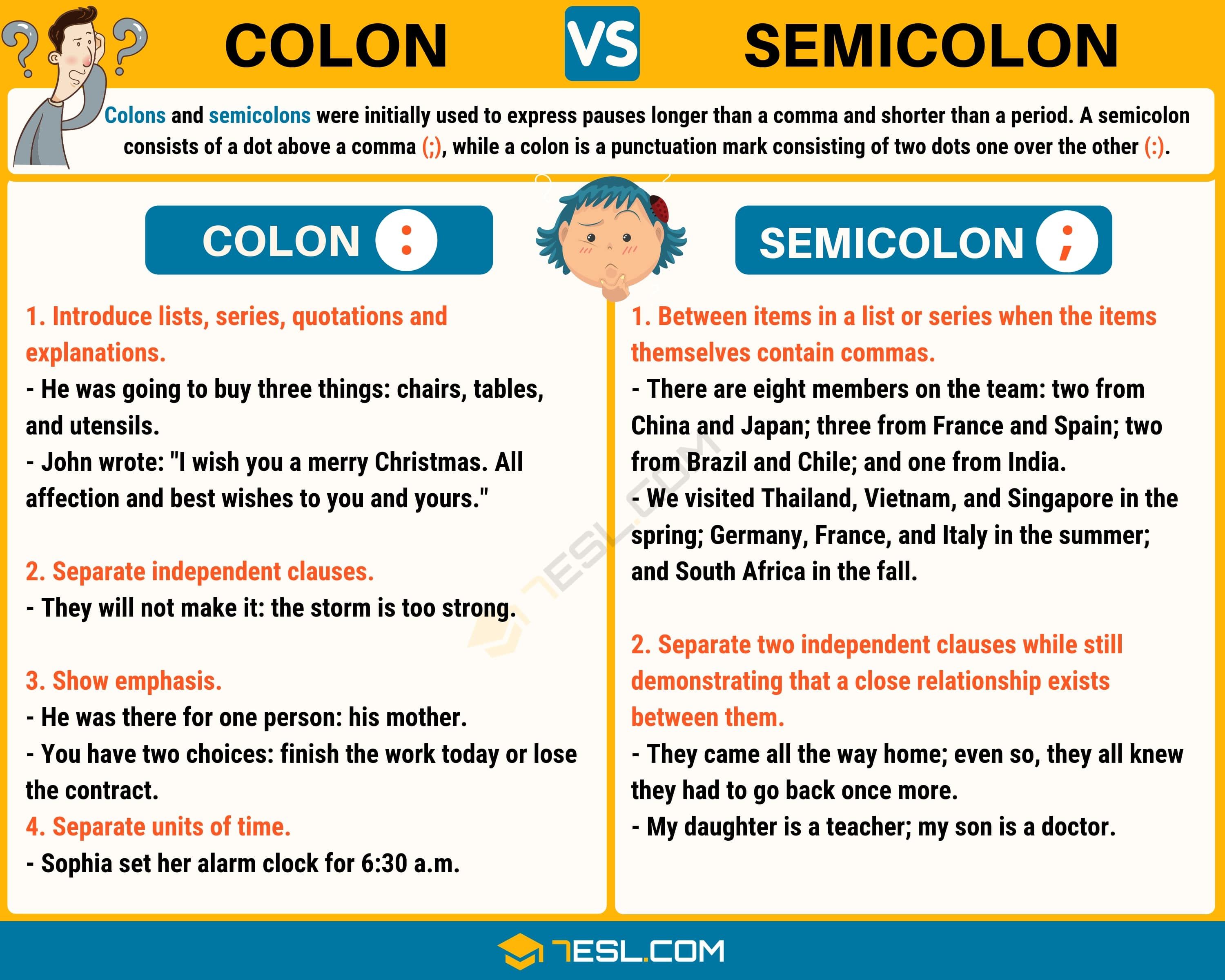
Semicolon Usage: Rules and Examples
Master the semicolon with clear rules for joining independent clauses, separating complex lists, and using conjunctive adverbs, plus real examples.
What has been corrected on this page?
Every accepted correction to this page is recorded with the exact change, so readers can see how the page improved over time.
-
Unverified quote attributed to Lewis Thomas. This exact quote could not be verified in The Medusa and the Snail or any other indexed source.; unverified quote attributed to Kurt Vonnegut. This specific quote could not be verified in A Man Without a Country or elsewhere; it is distinct from Vonnegut's well-documented, genuinely real remark that se; unverified quote attributed to Joseph Williams. This exact quote could not be verified in Style: Lessons in Clarity and Grace or any other indexed source.
Before<blockquote> <p>"The semicolon is a mark of thought, not a mark of performance. It tells the reader that two ideas are joined by the writer's mind. Used well, it is elegant. Used poorly, it is vanity." Lewis Thomas, The Medusa and the Snail</p> </blockquote> [...] <blockquote> <p>"The semicolon tells the reader: pause here and hold these two thoughts in your head at once. It is the only mark of punctuation that demands the reader keep two ideas suspended in the air." Kurt Vonnegut, A Man Without a Country</p> </blockquote> [...] <blockquote> <p>"Formal writing without semicolons is possible but clumsy. The long sentences that academic and legal prose require depend on the semicolon to give the reader handholds through complex ideas." Joseph Williams, Style: Lessons in Clarity and Grace</p> </blockquote>
After<blockquote> <p>Essayists who write about language, such as Lewis Thomas in The Medusa and the Snail, treat the semicolon as a mark of connected thought rather than performance: used well it is elegant, used purely for show it reads as vanity.</p> </blockquote> [...] <blockquote> <p>The semicolon has a distinctive rhetorical effect: it asks the reader to pause and hold two related thoughts in mind at once, rather than closing one off before starting the next, the way a period does.</p> </blockquote> [...] <blockquote> <p>Style guides such as Joseph Williams's Style: Lessons in Clarity and Grace note that formal writing can technically avoid semicolons, but the long, multi-clause sentences common in academic and legal prose often rely on them to give readers handholds through complex ideas.</p> </blockquote>
Why: Unverified quote attributed to Lewis Thomas. This exact quote could not be verified in The Medusa and the Snail or any other indexed source.; unverified quote attributed to Kurt Vonnegut. This specific quote could not be verified in A Man Without a Country or elsewhere; it is distinct from Vonnegut's well-documented, genuinely real remark that se; unverified quote attributed to Joseph Williams. This exact quote could not be verified in Style: Lessons in Clarity and Grace or any other indexed source.
View the full record →
Who checked this page?
1 contributor has checked "Semicolon Usage: Rules and Examples" on Evolang. Each name below links to that person's public CitePep profile, where every contribution they have made is listed with the exact change they proposed.