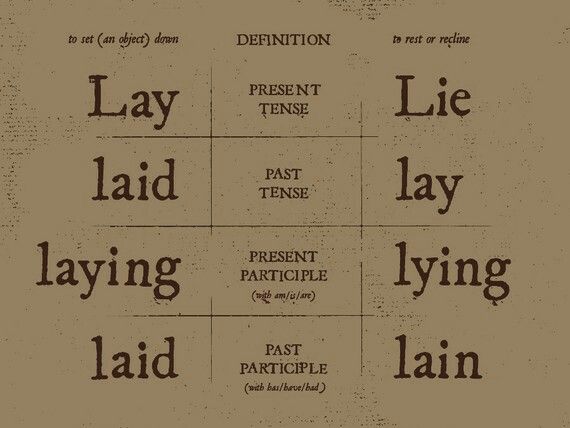
Lay vs Lie: Usage Guide with Examples
Master lay vs lie with clear rules, present and past tense tables, 20+ example sentences, and a quick memory trick that eliminates the confusion for good.
The exact change
"The lay and lie distinction is one of the few grammar rules where the gap between spoken and written English is large enough to matter in publishing. Careful writers still keep the two verbs separate." Bryan Garner, Garner's Modern English Usage [...] "Grammar rules stick faster when you learn them in a specific sentence than when you learn them as an abstract pattern. Write out five correct sentences with each form, and the rule will not slip back." Steven Pinker, The Sense of Style
The lay and lie distinction is one of the grammar rules where everyday speech and edited writing diverge the most. Careful writers still keep the two verbs separate in formal contexts. [...] Grammar rules tend to stick faster when learned through specific example sentences rather than as abstract patterns. Writing out a few correct sentences with each form can help the distinction hold.
Why this is better
Quote attributed to Bryan Garner / Garner's Modern English Usage is unverified. Garner's actual published guidance on lay/lie (verified via LawProse.org, his own site) describes the transitive/intrans; Quote attributed to Steven Pinker's The Sense of Style could not be verified in any source and does not match Pinker's documented thesis in that book, which argues writers should understand the reason
More by Selen Ikbal Uslu in Grammar Guide
- Correction Fewer vs Less: When to Use Each
- Correction Affect vs Effect: The Definitive Guide for Clarity
- Correction Comma Rules Everyone Gets Wrong (and How to Fix Them)
- Correction Who vs Whom: Clear Definitive Guide