
Correction Learning Science Knowledge
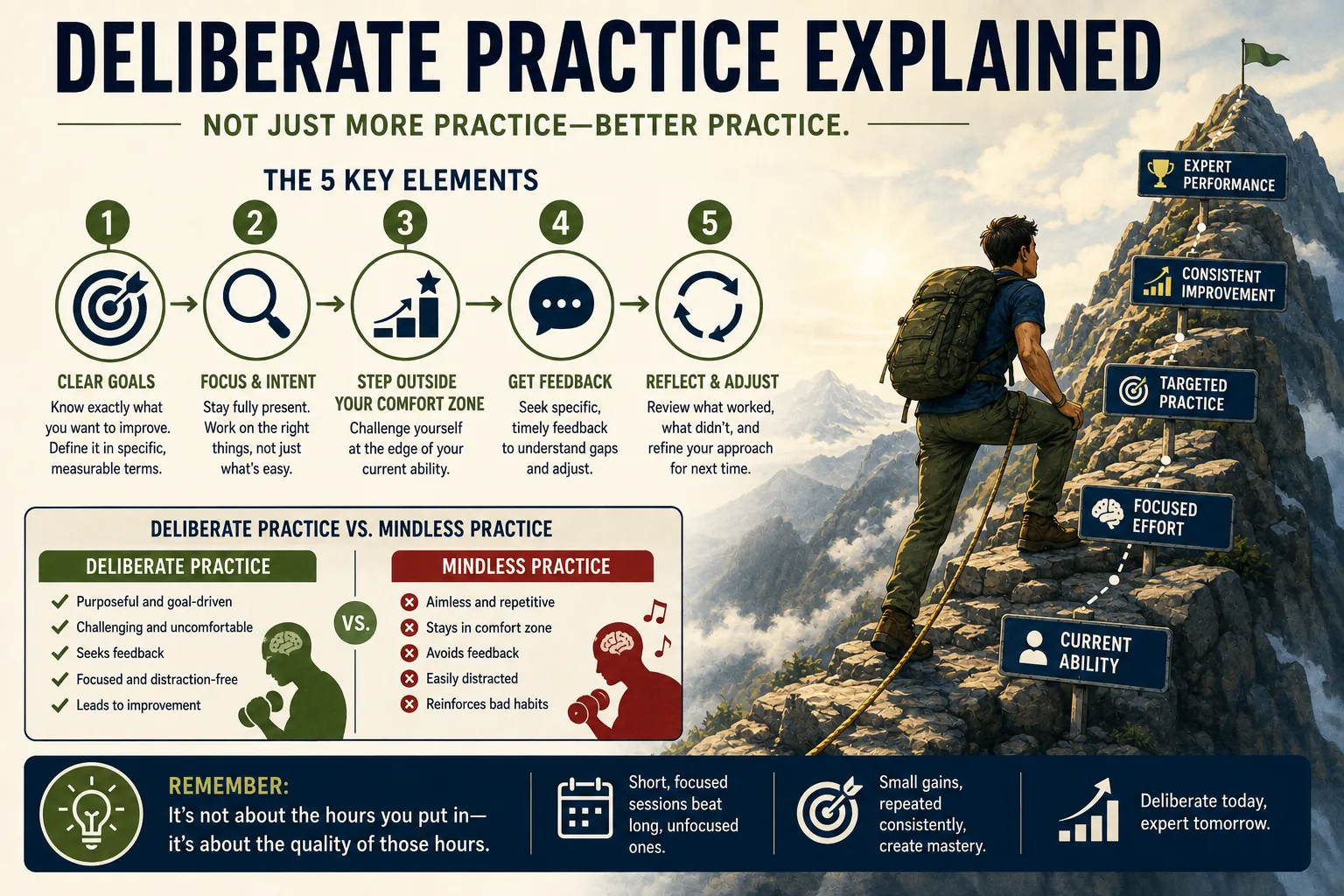
Deliberate Practice Explained
Deliberate practice explained: what the Berlin violin study really found, and why practice hours explain only 1% of professional performance.
Factually incorrect
The exact change
Before
A 2019 meta-analysis by Cook, Brydges, Zendejas, Hamstra, and Hatala in Academic Medicine synthesized 182 studies comparing simulation-based deliberate practice against traditional clinical training. | Simulation produced learning effect sizes of 1.2 standard deviations above traditional approaches for procedural skills - among the largest effect sizes ever recorded in medical education research.
After
A 2011 meta-analysis by William McGaghie and colleagues in Academic Medicine pooled 14 studies comparing simulation-based medical education with deliberate practice against traditional clinical training. | The pooled effect size correlation was 0.71 in favor of simulation with deliberate practice for acquiring specific clinical skills.
Suggested change
Corrected 2 figures to the published source.
Why this is better
Each study and survey figure in the article was checked against the published source. Figures that differed from the source were corrected to the source's own numbers, dates and attribution.
More by Emir Baycan in Learning Science Knowledge
- Correction How Experts Build Mental Representations
- Correction Cobra Effect in Education: When Incentives Backfire
- Correction Double-Loop Learning: How Organizations Learn from Errors
- Correction Tacit Knowledge: Understanding Unwritten Expertise