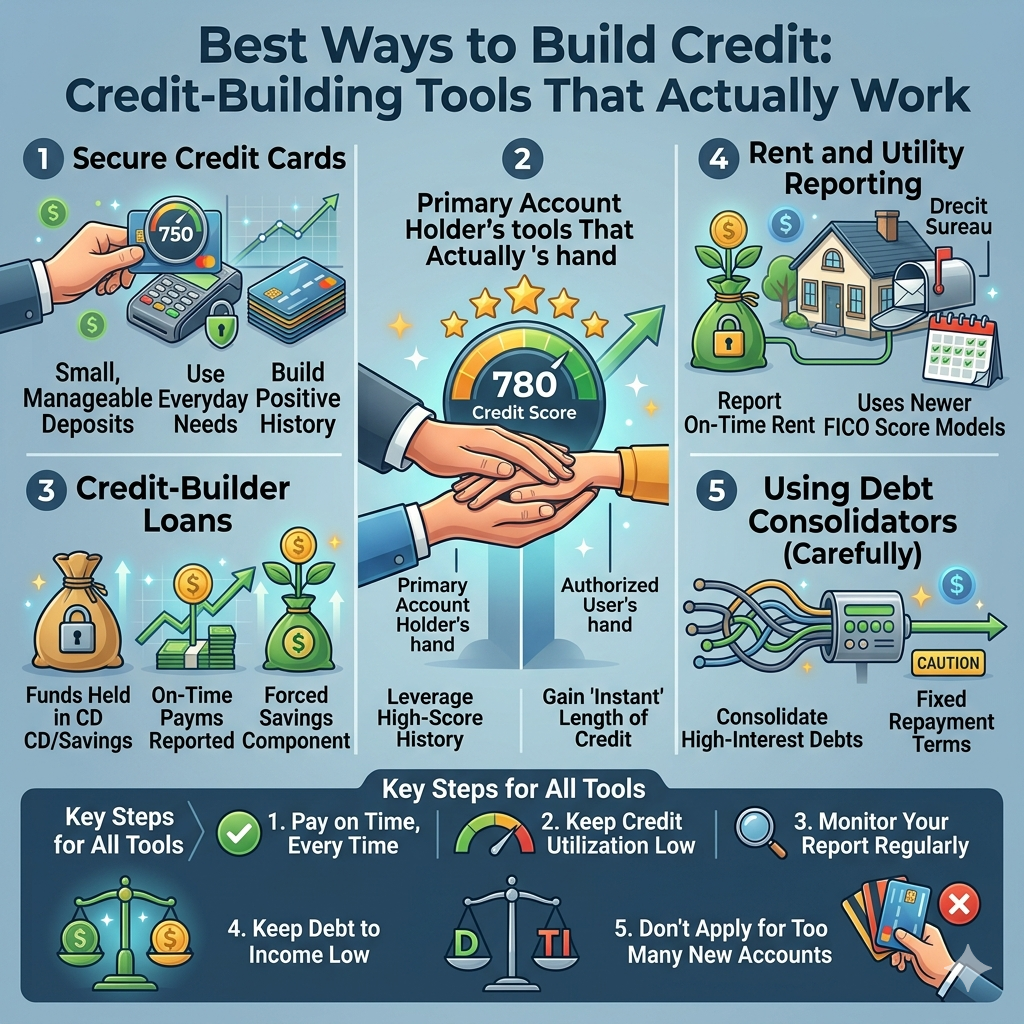
How to Build Credit: A Complete Guide
Learn how to build credit from scratch or repair damaged credit using secured cards, credit-builder loans, and the authorized user strategy.
What was corrected
The article attributed a 10% thin-file predictive-power figure to a 2010 Fed study, reported a 24-point CFPB credit-builder result without full conditions, presented authorized-user and CBL effects as universal, treated a 2024 medical-debt proposal as current policy, cited an Experian ~21-point rent-reporting gain as a guarantee, stated 1 in 5 consumers had a verified error, and said a freeze makes new-account fraud impossible.
Restated each claim to what the sources support: the Fed report's actual scope, the CFPB study's conditional findings, case-dependent thin-file effects, the proposed (not enacted) medical-debt rule, the Experian figure as an average vendor result, the FTC study's actual error framing, and the freeze as a very strong but not absolute protection.
Why this is better
The sources are genuine but were mis-attributed or overstated. Corrections scope each claim to the primary source (2010 Fed report, CFPB credit-builder study, 2013 FTC report, Experian product data) rather than adding new sources.
More by Emir Baycan in Concepts
- Correction Learning Myths That Refuse to Die
- Correction First Principles Thinking: Elon Musk's Approach Explained
- Correction Nine Methods to Learn Anything Faster and Effectively
- Correction The Limits of Rules